Front Range Real Estate Market Update
Real Estate Grant Dolby August 24, 2026
Real Estate Grant Dolby August 24, 2026
Real Estate Grant Dolby August 24, 2026
Homes are still selling, and prices have generally held up better than the headlines might suggest. But buyers have become more selective, and they have considerably less tolerance for overpricing.
This isn't a market where sellers need to panic. It is a market where we need to pay close attention to what buyers are actually doing and adjust quickly when the evidence changes.
The average 30-year mortgage is approximately 6.67%, compared with 6.43% in early July.
That may not sound like a dramatic difference, but buyers experience the market through their monthly payment. Higher rates reduce purchasing power and make buyers much more sensitive to price, condition and potential future expenses.
The small decline in rates this past week is encouraging, but it is not yet enough to materially change the market.
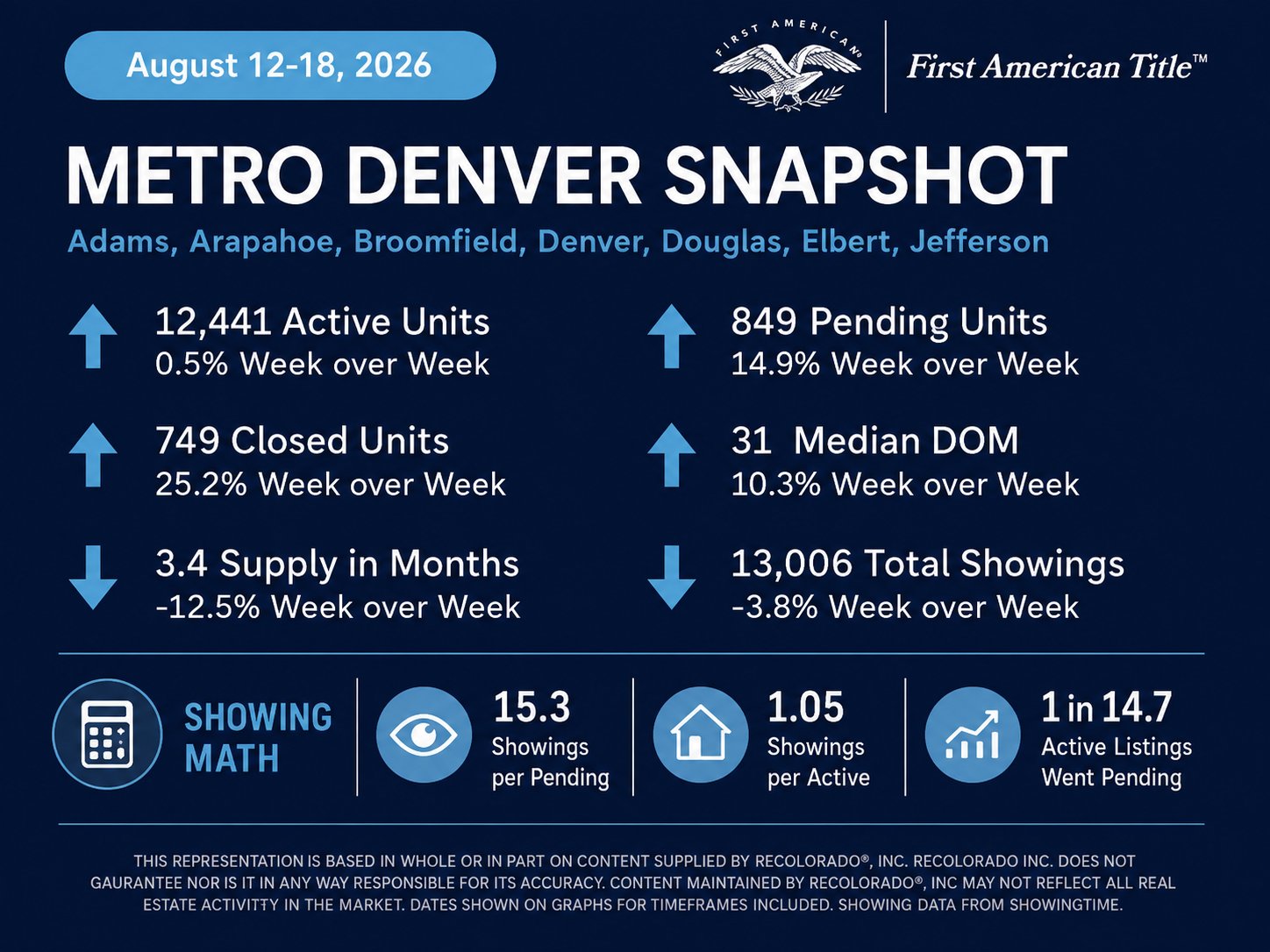
Greater Denver entered August with a substantial supply of homes for sale.
Interestingly, inventory is not suddenly exploding. New listings actually declined from June to July, and overall active inventory is slightly below where it was a year ago.
The challenge is that buyer demand has slowed faster than the available inventory is being absorbed.
That gives buyers time to compare homes carefully rather than feeling pressured to purchase the first acceptable property.
This is one of the more important changes we're watching.
ShowingTime reported that showing activity nationally fell about 10% from June to July. Denver-area pending contracts also declined approximately 6% from June.
That doesn't mean buyers disappeared. It means they're becoming more deliberate.
A year or two ago, a buyer might have toured ten homes and written on one. Today they may study 30 homes online, save six, tour three and write on one.
That makes each showing more meaningful.
This is probably the strongest signal in the current market.
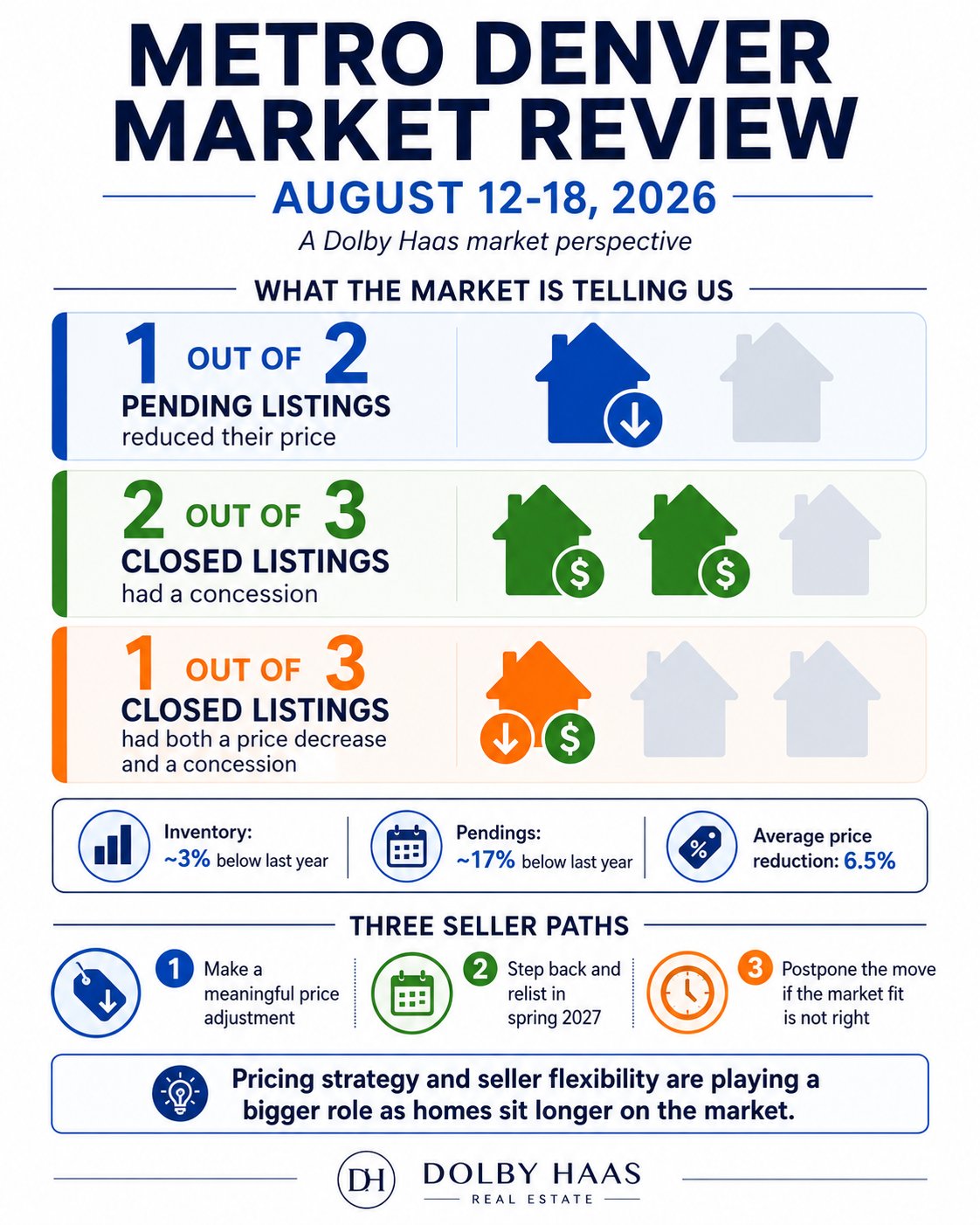
Approximately 31% of Denver-area listings took a price reduction during July, one of the highest percentages among major U.S. metropolitan areas.
That does not mean Denver home values suddenly fell 31%, or anything close to it.
It means many homes initially came to market at prices buyers weren't willing to accept.
Meanwhile, homes that are priced correctly and presented well continue to sell.
Online activity has become an important part of how we evaluate a listing.
Views and saves are useful, but they aren't the final score.
We look at the entire progression:
Views → Saves → Showings → Second Showings → Offers → Contract
For example:
If a home receives strong Zillow traffic and saves but very few showings, buyers probably like the property but aren't comfortable enough with the price to schedule a visit.
If we're receiving good showing activity but no second showings or offers, buyers are usually telling us something about price, condition or how the home compares with competing properties.
That information allows us to make decisions based on actual buyer behavior rather than guessing.
Greater Denver: Prices remain relatively resilient, but homes are taking longer to sell and buyers have more negotiating leverage.
Denver: Location still matters enormously, but buyers are discounting dated finishes, busy streets, basement limitations and renovation costs more aggressively than they did several years ago.
Douglas County: Good family homes in desirable neighborhoods continue to attract buyers. Larger and higher-priced homes face more competition from new construction and need particularly strong presentation.
Arapahoe County: Affordability is increasingly important. Buyers are paying close attention to HOA expenses, insurance costs and future maintenance.
Jefferson County: The market varies dramatically by neighborhood and property type. Updated suburban homes generally have a larger buyer pool than foothill, acreage or highly specialized properties.
Colorado Springs: Prices have remained relatively stable, but homes are taking longer to sell. Buyers have enough choices that condition and pricing matter considerably.
Monument: Quality properties continue to attract buyers, but the upper end of the market is selective. Lot quality, views, updating, garage space and overall presentation can make a substantial difference.
The Front Range housing market is not collapsing.
In fact, prices have remained surprisingly resilient considering mortgage rates and the amount of inventory available.
But this has become a very selective market.
Buyers will still compete for homes they perceive as excellent values. They are much less willing to overlook an ambitious price, deferred maintenance or inferior presentation.
That's why we're monitoring your listing against the market continuously rather than simply putting it online and waiting.
The goal is not just getting more people to see the property. The goal is turning the right buyer's interest into a contract.
Our objective isn't to react to every weekly statistic. It is to identify meaningful changes in buyer behavior early enough to do something useful about them.
For each listing, we're watching:
The first couple of weeks on the market are particularly important.
If we're getting strong activity, we stay the course.
If we're getting online attention but buyers aren't scheduling showings, we investigate why.
If buyers are touring but nobody is moving toward an offer, we compare their feedback with the competitive market.
And when the evidence tells us something needs to change, I'd rather make a meaningful adjustment early than spend six weeks accumulating market time and then chase the market downward.
Stay up to date on the latest real estate trends.

Real Estate
A difficult property. A strong outcome. 98% of asking price.
Broker
Success Story

Real Estate
Buyers Gain Leverage, but Prices Are Holding
Real Estate
August 17, 2026

August 12–18, 2026
Dolby Haas has established a reputation for outstanding performance including several recording-breaking sales from Northern Colorado Springs, Evergreen, Greater Denver, and Broomfield. Contact him today!