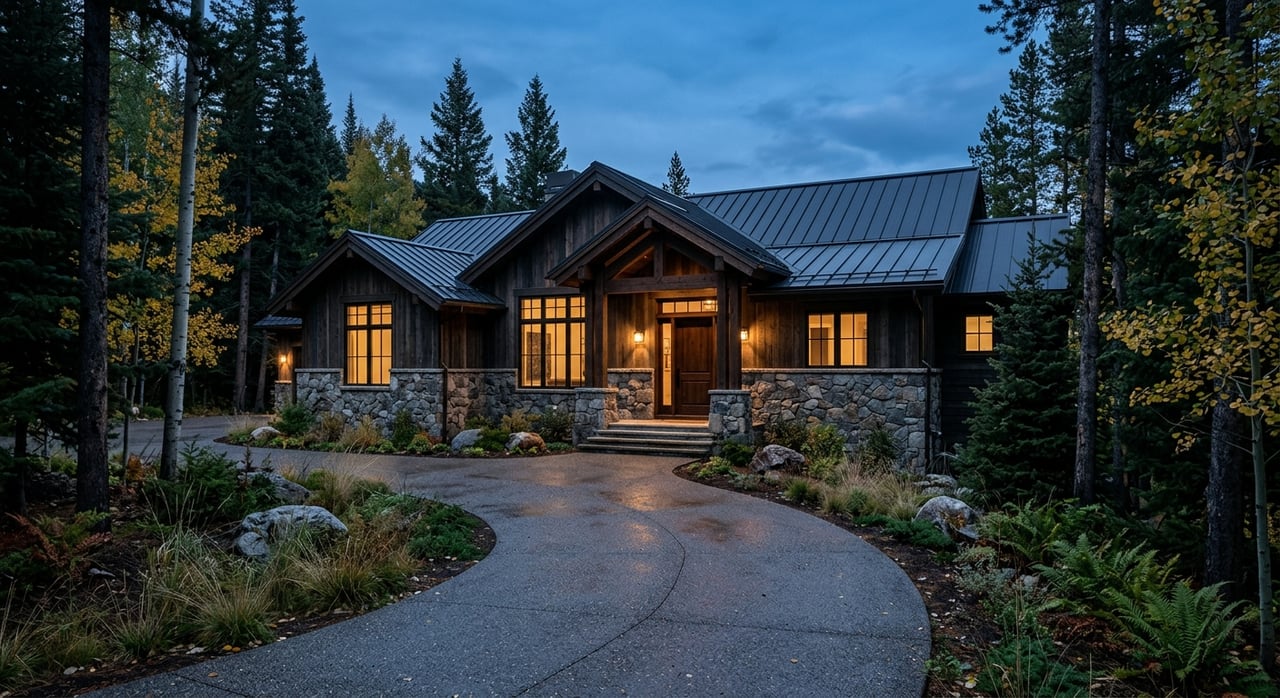
Castle Pines Neighborhoods Guide to the Most Sought-After Areas
April 23, 2026
April 23, 2026
April 23, 2026
Wondering where to focus your Castle Pines home search? That is a smart question, because this city offers a few very different living experiences depending on which side of I-25 you choose, how much privacy you want, and how important newer amenities are to your day-to-day routine. If you are relocating, upsizing, downsizing, or simply trying to narrow the map, this guide will help you compare Castle Pines’ most sought-after areas in practical terms. Let’s dive in.
Castle Pines continues to stand out for buyers who want a suburban setting with open space, trail access, and relatively convenient connections to the Denver Tech Center and greater metro area. The city has about 16,000 residents, and according to the City of Castle Pines community overview, 94% of survey respondents rated it an excellent or good place to live, while 91% said they feel safe with very little crime.
That same city information also adds useful context for buyers. Residents have said that business, retail, and restaurant options remain a main area for improvement, which helps explain why many households still use nearby commercial centers for everyday errands. The city’s long-term planning also emphasizes housing variety, neighborhood character, and better trail connections across I-25.
Before you compare neighborhoods, it helps to narrow your priorities. In Castle Pines, the best-fit area often comes down to four practical questions.
If you answer those clearly, your search usually becomes much easier. In broad terms, The Village at Castle Pines is the privacy-and-golf option, The Canyons and nearby growth areas are the newer-home and future-amenity option, and the established west-side neighborhoods are the resale-variety option.
The Village at Castle Pines is the area’s best-known gated community and one of the clearest choices for buyers who want privacy, views, and a club-centered setting. According to the Village fact sheet, the community spans about 2,800 acres with roughly 1,800 homes, 13 miles of trails, three children’s play parks, five staffed gated entries, 24/7 community patrol, 24/7 EMT coverage, and two private championship 18-hole golf courses.
This is not a typical production-home neighborhood. The housing identity leans heavily toward custom and estate-style properties, with larger lots, mature Ponderosa pine surroundings, wildlife, and view-oriented homesites. The community lifestyle and property overview also highlights resident clubs, social events, pools, fitness, tennis, pickleball, and additional custom-home lot opportunities.
The Village often appeals to buyers who want a more secluded feel without moving far from metro job centers. It is especially relevant if you value controlled access, established natural surroundings, and a strong sense of separation from busier commercial corridors.
For commuters, location is part of the draw. The Village location page places it off Interstate 25 and Highway 85 at Happy Canyon Road and notes travel times of about 20 minutes to the Denver Tech Center and about 30 minutes to downtown Denver in normal traffic.
The benefits here are clear, but so is the level of structure. If you are considering The Village, pay close attention to community rules, membership expectations, property upkeep, and how much of your budget you want allocated to a gated, amenity-rich environment.
For the right buyer, that tradeoff makes perfect sense. If your goal is privacy, golf access, and a highly defined neighborhood experience, The Village is often the benchmark in Castle Pines.
If you want newer construction, a master-planned feel, and a broad range of housing options, The Canyons deserves a close look. The developer fact sheet describes a 1,270-acre community east of I-25 between the Hess Road and Happy Canyon Road interchanges, with about 2,000 single-family and multi-family homes and roughly one-third of the land devoted to parks, trails, and open space.
The housing mix is one of the biggest selling points. Plans include ranch homes, two-story homes, patio plans, paired homes, and multi-family options, which gives buyers more flexibility than many older neighborhoods. The same fact sheet notes about 15 miles of trails and identifies Buffalo Ridge Elementary, Rocky Heights Middle, and Rock Canyon High as the current school path, along with 12 acres reserved for future public schools.
The Canyons is built around everyday usability, not just curb appeal. According to the community website, amenities include The Exchange Coffee House, Canyon House, adult and family pools, playgrounds, and amphitheater and lawn space.
There is also notable future investment nearby. The city reports that a new Life Time athletic country club broke ground in 2025 with a planned late-2026 opening, adding to the area’s long-term convenience and amenity appeal.
For buyers who need reliable freeway access, The Canyons is one of the easiest areas to understand. It sits right off I-25 exit 188, which makes regional commuting relatively straightforward.
That can matter a lot if you split time between home, the DTC, downtown meetings, or regional travel. If your goal is a newer home with direct access and a more planned neighborhood experience, The Canyons is often near the top of the list.
Castle Valley and the Town Center area are worth watching if you want housing variety and future convenience. The City of Castle Pines planning page describes Castle Valley, formerly Lagae Ranch, as a 249-acre planned development just south of the Village Square Commercial District with Elk Ridge Park, American Academy Charter School, up to 231 single-family homes, 400 multifamily residences, an additional elementary school, 76 acres of open space, trails, civic and community uses, commercial uses, and limited retail.
The city’s Town Center plan adds another nearby mixed-use area at the northwest corner of Happy Canyon Road and I-25. That plan includes up to 475 single-family homes and 200 multifamily residences, plus parks, schools, civic uses, and commercial space.
These areas are appealing because they point toward a more mixed and flexible future. If you like the idea of newer housing types, nearby services, and a neighborhood that may gain convenience over time, Castle Valley and Town Center deserve a place on your shortlist.
They can be especially relevant for buyers who do not need the exclusivity of a gated golf community but do want something more current than some of the older west-side resale neighborhoods. For relocators, that can create a practical middle ground between established and emerging Castle Pines options.
If you prefer established neighborhoods, Castle Pines offers a broad collection of west-of-I-25 communities with more mature streetscapes and a wider resale mix. The city’s public works and wildfire planning materials reference neighborhoods including Buffalo Ridge, Canterbury Park, Castle Pointe, Coyote Crossing, The Crossings, Daniel’s Ridge, Esperanza, Forest Park, Hamlet, Lifestyle, Turquoise Terrace, Ventanna, Whisper Canyon, and others.
This side of the city tends to appeal to buyers who want options. Instead of one large master-planned identity, you get a patchwork of neighborhoods with different ages, lot sizes, HOA structures, and home styles.
The city mitigation plan gives useful detail on several west-side neighborhoods. Castle Pines North HOA1 and HOA2 include single-family homes from the 1980s through the 2000s, while Canterbury Park includes 96 attached townhomes built from 1999 to 2002.
Bramble Ridge features 80 single-family homes plus patio homes built between 2001 and 2003 and includes a clubhouse and pool. Bristle Cone includes homes from the 1990s, Green Briar and Winter Berry are early-2000s single-family pockets, and Stone Croft sits next to fairways owned by The Ridge at Castle Pines North golf course.
For lot-style comparisons, Daniel’s Ridge includes ranch-style homes with walk-out basements on lots between 0.2 and 0.4 acres. The Estates at Buffalo Ridge includes 88 homes built since 2005 on lots typically between 0.2 and 0.3 acres, while The Hamlet includes 61 homes built between 1987 and 1996 on parcels under half an acre.
Whisper Canyon stands out as a gated 44-home enclave on parcels from 0.3 to 1.8 acres. Hidden Pointe is denser and has a single ingress and egress route, and the city notes higher wildfire exposure there because of surrounding open space.
The west-side neighborhoods usually make the most sense if you want established resale inventory and more variation from one pocket to the next. Some buyers prefer that because it allows for better lot, layout, and price comparisons across different neighborhoods.
The tradeoff is that neighborhood details can vary quite a bit. HOA rules, amenities, architectural consistency, and utility structures are not uniform from one area to another, so due diligence matters more here than in a single large master-planned community.
One practical point many buyers miss is that service structures differ by location. The city notes that drinking water and wastewater are handled by CPNMD west of I-25 and Parker Water and Sanitation east of I-25, so the side of the freeway you choose can affect how local services are organized.
HOA research is just as important. The city also states that it is not the HOA, which means trash service, dues, and many neighborhood-level rules should be verified directly through the property’s HOA lookup and governing documents, as explained on the city’s community information page.
Castle Pines’ natural setting is part of its appeal, but it also creates practical ownership considerations. The city’s wildfire planning materials note that exposure can vary by neighborhood based on open-space adjacency, native vegetation, access routes, and building materials.
That does not mean you should avoid these areas. It means you should evaluate defensible space, construction materials, insurance implications, and neighborhood access with the same care you give price and floor plan.
Connectivity is another important factor. City planning documents and survey feedback show that better trail and bike or pedestrian connections across I-25 remain part of the community conversation, so east-west access is not only about driving time.
If you want the shortest path to the right neighborhood, match your priorities to the area type. That framework can save you time and help you focus on homes that really fit your lifestyle.
| Priority | Best-Fit Area |
|---|---|
| Privacy, gated access, golf lifestyle | The Village at Castle Pines |
| Newer homes, planned amenities, easy I-25 access | The Canyons |
| Future mixed-use convenience, broader housing variety | Castle Valley and Town Center |
| Mature landscaping, established resale choices, varied lot options | West-of-I-25 neighborhoods |
The good news is that Castle Pines gives you real choice. Whether you want a custom estate setting, a newer master-planned neighborhood, or an established resale pocket, you can usually find an area that matches how you want to live day to day.
If you are comparing Castle Pines neighborhoods and want help narrowing the map based on commute, lot style, resale potential, or relocation timing, connect with Dolby Haas. Their team brings experienced, hands-on guidance to buyers and sellers across Douglas County and the greater Denver area.
Stay up to date on the latest real estate trends.
Lifestyle
What It's Really Like Beyond the Vacation Crowds

Real Estate
This Denver Neighborhood Continues to Attract Buyers

Real Estate
A Rare Opportunity at Parkland Estates Airpark
Real Estate
Summer Has Arrived, and So Have Buyer Choices
Broker
Experience, Innovation, and Results
They're Just Not Buying Everything
Real Estate
What the Data Actually Says
Dolby Haas has established a reputation for outstanding performance including several recording-breaking sales from Northern Colorado Springs, Evergreen, Greater Denver, and Broomfield. Contact him today!