B-58 Hustler History and the Story of Its Final Flight
Lifestyle Grant Dolby May 21, 2026
Lifestyle Grant Dolby May 21, 2026
Lifestyle Grant Dolby May 21, 2026
Cold War Aviation History
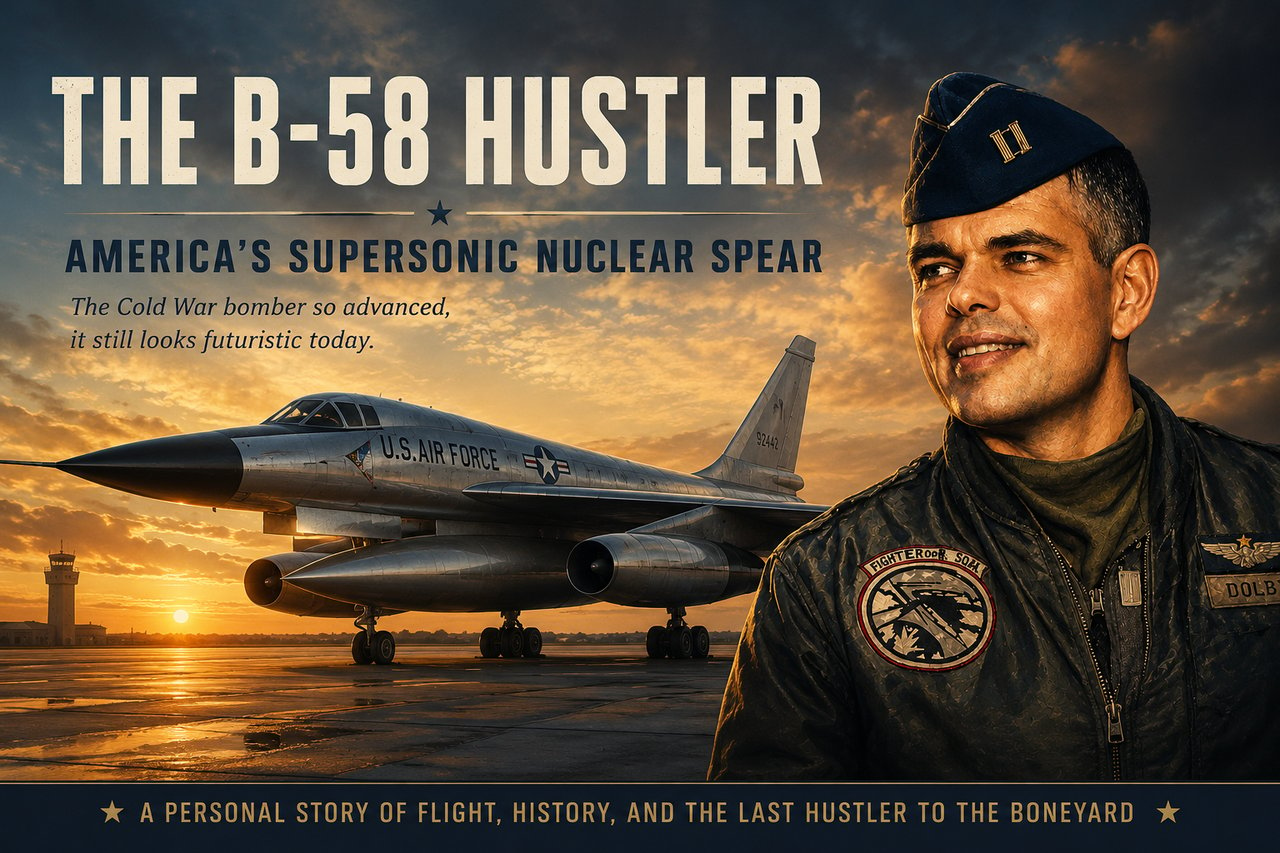
The B-58 Hustler: America’s Supersonic Nuclear Spear
The Cold War bomber so advanced it still looks futuristic today.
There are airplanes, and then there are machines so far ahead of their time they almost seem impossible even decades later. The Convair B-58 Hustler was one of those machines.
Long before stealth bombers and GPS-guided weapons, the B-58 was already flying twice the speed of sound, carrying nuclear weapons, and pushing both pilots and engineering to the edge of what was possible. It looked less like a bomber and more like something from a science fiction movie. Sharp delta wings. Four screaming turbojets. Tiny cockpit windows. Pure speed.
And for a brief moment during the Cold War, it was the fastest strategic bomber on Earth.
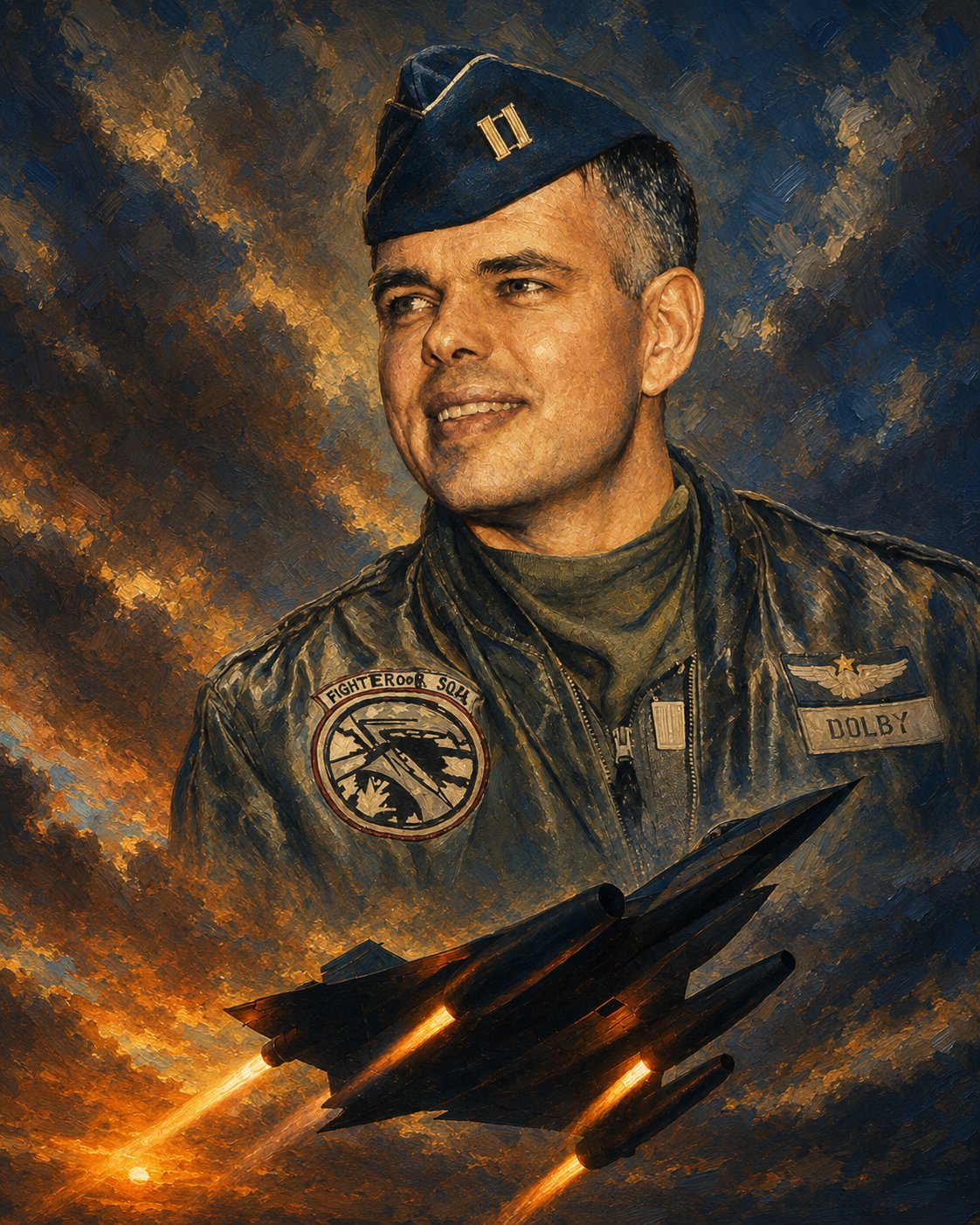
My father knew that airplane firsthand. In the early 1970s, he flew the last B-58 to the boneyard, closing the chapter on one of the most ambitious aircraft America ever built.
That’s not just aviation history. That’s family history.
Mach 2 Supersonic bomber
3 Crew members
1960 Entered service
1970 Retired from service
Born From Cold War Pressure
The B-58 was developed during the height of tensions between the United States and the Soviet Union. In the 1950s, military planners believed nuclear war could erupt with almost no warning. America needed a bomber capable of penetrating Soviet airspace at incredible speed before enemy fighters or missiles could intercept it.
Convair answered with something radical.
The Hustler became the first operational bomber capable of sustained Mach 2 flight, reaching speeds over 1,300 miles per hour. In the late 1950s, that was almost unbelievable technology.
The aircraft carried a three-man crew:
Pilot
Navigator / Bombardier
Defensive Systems Operator
Each crew member sat in an individual cockpit with a dedicated escape capsule because ejecting at twice the speed of sound would otherwise be fatal. That alone tells you what kind of machine this was.
The Airplane That Looked Like Tomorrow
The B-58 had presence.
Parked on a runway, it looked dangerous even standing still. Its long narrow fuselage and massive delta wing made it appear more like a rocket than a bomber.
Pilots respected the aircraft because it demanded precision. The Hustler was fast, complicated, and unforgiving. It could perform brilliantly, but there was very little room for mistakes.
Compared to slower bombers like the B-52 Stratofortress, the B-58 was more like a thoroughbred racehorse. Incredible performance, but expensive and demanding.
It also burned fuel at an astonishing rate and required enormous maintenance support. Still, for a brief period, it could outrun nearly anything in the sky.
Why the Hustler Disappeared
Ironically, the same technological race that created the B-58 eventually made it obsolete.
As Soviet surface-to-air missile systems improved during the 1960s, flying high and fast became increasingly dangerous. Military strategy shifted toward low-altitude penetration and eventually stealth technology.
The Hustler’s operating costs were also enormous. It was expensive to maintain, expensive to fly, and difficult to operate.
So despite its groundbreaking performance, the B-58 served only from 1960 to 1970.
Just ten years.
That short lifespan only adds to the aircraft’s mystique today.
The Final Flight
Every airplane eventually flies its last mission.
For many military aircraft, that final destination is Davis-Monthan Air Force Base near Tucson, Arizona, home to the massive aircraft storage facility known simply as “the boneyard.”
That’s where the final B-58 ended its journey.
My father flew that last aircraft there in the early 1970s.
One final flight carried an airplane that represented America’s Cold War ambition, engineering confidence, and strategic nuclear doctrine into the Arizona desert for retirement.
No dramatic ceremony. No Hollywood ending. Just one final landing and the closing of a remarkable chapter in aviation history.
For pilots and crews who flew the Hustler, that moment had to mean something deeper than simply parking another airplane. The B-58 wasn’t easy to fly, and it certainly wasn’t ordinary.
Machines like that leave an impression on the people who operated them.
Why the B-58 Still Matters
Today, surviving Hustlers sit quietly in museums while visitors stare at them wondering how something designed in the 1950s still looks futuristic.
Because the B-58 came from an era when engineers were encouraged to push limits instead of manage them.
It was bold. It was risky. It was expensive. And it was magnificent.
The aircraft proved sustained supersonic strategic flight was possible and helped advance aerodynamics, avionics, materials, and crew survival systems far beyond what existed before it.
Most importantly, it symbolized an era when speed and innovation were viewed as America’s greatest strategic weapons.
For my family, though, the B-58 means something more personal. Some families pass down heirlooms. Mine passed down the story of flying one of the most extraordinary bombers ever built on its final flight into history.
There are moments in childhood that stay frozen in time forever.
For me, one of those moments was standing on the edge of a runway as a little kid watching my father climb into the cockpit of a military jet, start the engines, taxi away, and disappear into the horizon.
Every five-year-old boy should be so lucky.
At the time, I didn’t fully understand what he was doing. I only knew my dad flew enormous airplanes for the United States Air Force during the Cold War and Vietnam era. To a child, it felt larger than life. Most kids had fathers who drove to work. Mine vanished into the sky.
Only later did I begin to understand what those flights really meant.
My father, Robert Dolby, flew during one of the most dangerous and technologically intense periods in aviation history. He flew KC-135 tankers supporting Vietnam combat operations and later flew the legendary Convair B-58 Hustler, the first operational Mach 2 nuclear bomber ever built.
And in the early 1970s, he flew the final B-58 to the boneyard.
That sentence barely sounds real.
To understand these men, you have to understand the era.
This was peak Cold War America. Nuclear bombers sat on alert around the clock. Crews trained constantly. The assumption was that World War III could begin with almost no warning.
My father was stationed at Ellsworth Air Force Base with the 28th Air Refueling Squadron, one of the largest tanker squadrons in Strategic Air Command.
Their mission during Vietnam was twofold:
Refuel tactical fighters over Southeast Asia
Support massive B-52 bombing raids staged from Guam
The tanker crews operated from Okinawa, Thailand, and other forward bases in brutal conditions. Flights often launched before dawn, sometimes in monsoon weather severe enough to border on insanity.
One memory he described perfectly captures the danger:
During heavy rain at Kadena Air Base, KC-135 crews launched one minute apart carrying maximum fuel loads on flooded runways. The aircraft had no windshield wipers, only a narrow strip of visibility cleared by air pressure.
Imagine trying to fly a fully loaded jet tanker through a tropical storm while peering through six inches of visibility.
One crew didn’t make it.
That was simply part of the job.
What strikes me most reading my father’s stories today is how young these men were and how casually they handled enormous responsibility.
They flew exhausting schedules with constantly shifting sleep cycles. They orbited near North Vietnam while surface-to-air missile sites tracked them from shore. Chinese fighter bases sat just beyond the horizon.
At one point, my father described an entire cockpit crew unintentionally falling asleep while flying between Taiwan and China.
The autopilot saved them.
Another time, he found a 30-foot python wrapped around the landing gear of his aircraft in Thailand.
That was apparently just another day.
There’s a certain dry humor running through stories from that generation. They rarely dramatized danger because danger was simply built into everyday life.
Then there was the Hustler.
The B-58 was unlike anything else in the sky. Sleek delta wings. Four turbojets. Mach 2 capability. Nuclear mission.
Even today, it still looks futuristic.
The aircraft represented America’s belief that speed and technology could overcome anything. It was brilliant, beautiful, expensive, and incredibly demanding to fly.
Its operational life was short, lasting only about a decade before missile technology began overtaking the concept of high-speed strategic bombing.
But for the men who flew it, the B-58 became legendary.
And somehow, my father ended up flying the final one to the boneyard in Arizona as the program came to an end.
There’s something poetic about that final mission. One last flight carrying a machine that represented the peak of Cold War ambition into the desert for retirement.
Not many people on Earth can say they closed the final chapter of an aircraft program like that.
Like many men from that era, my father rarely spoke about these experiences when I was growing up.
That generation tended to treat extraordinary things as ordinary.
Global nuclear tension.
Combat operations.
Flying dangerous aircraft.
Watching friends die.
Months away from family.
Just part of the job.
Only now, decades later, do I realize how extraordinary those lives actually were.
And only now do I understand why those childhood memories made such a deep impression on me.
Because when you’re five years old and you watch your father disappear into the sky in a military jet, you don’t see fear or geopolitics or SAC doctrine.
You see a superhero.
Today, many of the pilots and crews from that era are gone. The number of surviving B-58 pilots is likely very small now.
That’s why preserving stories like these matters.
Not just because of military history or aviation technology, but because these stories capture a uniquely American generation. Men who carried staggering responsibility with very little fanfare and almost no complaint.
The airplanes were remarkable.
But the people inside them were even more remarkable.
And somewhere in my mind, I can still see one of those aircraft taxiing away… carrying my father into the sky and over the horizon.
Some airplanes are remembered because they were successful.
Others are remembered because they were unforgettable.
The Convair B-58 Hustler belongs firmly in the second category.
My father flew the B-58 during the height of the Cold War and later flew the final aircraft to the boneyard in Arizona when the program ended. Over the years, I heard bits and pieces of stories about the airplane, but only recently did I begin to appreciate just how insane the aircraft really was.
The more he tells me, the more the B-58 sounds less like a conventional bomber and more like a controlled nuclear experiment with landing gear.
As my father recently told me:
“Every time you flew it was an adventure. It could even be an adventure on the ground.”
That may be the most accurate description of the Hustler ever written.
The B-58 was built during the period when the Strategic Air Command believed speed was survival.
The aircraft was capable of sustained Mach 2 flight at a time when most airliners still cruised at barely half that speed. Its mission was simple: penetrate Soviet airspace fast enough to deliver nuclear weapons before enemy interceptors or missiles could stop it.
And the payload was staggering.
The aircraft carried a large pod beneath the fuselage that contained both fuel and a nuclear weapon. According to my father, the primary weapon was a 9-megaton thermonuclear bomb.
For perspective:
Hiroshima: roughly 20 kilotons
B-58 primary weapon: 9 megatons
That means the main weapon alone was hundreds of times more powerful than the bomb dropped on Hiroshima.
And apparently SAC decided that still wasn’t enough.
The aircraft could also carry four additional one-megaton weapons mounted externally between the fuselage and the inboard engines.
When you step back and think about that configuration for a minute, it becomes difficult to process rationally:
a Mach 2 bomber
loaded with multiple thermonuclear weapons
sitting on alert 24 hours a day
requiring launch within minutes
That wasn’t science fiction.
That was everyday Cold War reality.
My father was stationed at Little Rock Air Force Base during part of the B-58 era.
Like many SAC bases, aircraft sat on nuclear alert awaiting a launch order that everyone hoped would never come.
The crews constantly trained for rapid response scenarios intended to get the bombers airborne before Soviet intercontinental ballistic missiles could destroy them on the ground.
At Little Rock, the target response time was about fifteen minutes.
Fifteen minutes to:
receive the alert
sprint to the aircraft
start engines
taxi
launch a nuclear strike force
One of the most intense exercises was known as a “COCO” alert.
According to my father, the COCO required crews to:
start engines
taxi to the runway
begin the takeoff roll
then abort before departure
Imagine sixteen fully armed nuclear bombers simultaneously roaring to life while exhausted SAC crews sprinted across the ramp in the middle of the night.
Chaos barely describes it.
And then came the moment that perfectly captures why the B-58 became legendary among pilots.
After one of these COCO exercises, crews taxied back to the “Christmas Tree” alert area where engine checks were performed before shutdown.
My father ran the outboard engines up to full power and lit the afterburners. Then he repeated the process on the inboard engines.
That’s when he heard a loud explosion.
The maintenance chief radioed the cockpit with alarming news:
the right landing gear strut had cracked from top to bottom.
At that moment, according to my father, only two clamps on the landing gear assembly stood between the aircraft and total gear collapse.
And remember:
this was not an empty airplane.
The aircraft was sitting loaded with thermonuclear weapons.
Fortunately, crews managed to stabilize the aircraft by sliding an airbag beneath the wing before collapse occurred.
My father later described the situation with classic pilot understatement:
not a nuclear detonation… but potentially “a small explosion with nuclear fallout.”
Only in Cold War SAC would that qualify as a relatively good outcome.
What strikes me most listening to these stories today is how casually this generation handled responsibility that would terrify most people now.
These men:
flew Mach 2 bombers
sat nuclear alert
operated on minimal sleep
handled live thermonuclear weapons
trained for the literal end of civilization
…then came home and rarely talked about it.
As a child, all I knew was that my father climbed into incredible airplanes and disappeared into the sky.
Now, decades later, I understand what was really happening behind those memories.
The B-58 Hustler was one of the most extreme aircraft ever built.
But the men trusted to fly it may have been even more remarkable.
Some airplanes are remembered because they were successful.
Others are remembered because they were unforgettable.
The Convair B-58 Hustler belongs firmly in the second category.
My father flew the B-58 during the height of the Cold War and later flew the final aircraft to the boneyard in Arizona when the program ended. Over the years, I heard bits and pieces of stories about the airplane, but only recently did I begin to appreciate just how insane the aircraft really was.
The more he tells me, the more the B-58 sounds less like a conventional bomber and more like a controlled nuclear experiment with landing gear.
As my father recently told me:
“Every time you flew it was an adventure. It could even be an adventure on the ground.”
That may be the most accurate description of the Hustler ever written.
The B-58 was built during the period when the Strategic Air Command believed speed was survival.
The aircraft was capable of sustained Mach 2 flight at a time when most airliners still cruised at barely half that speed. Its mission was simple: penetrate Soviet airspace fast enough to deliver nuclear weapons before enemy interceptors or missiles could stop it.
And the payload was staggering.
The aircraft carried a large pod beneath the fuselage that contained both fuel and a nuclear weapon. According to my father, the primary weapon was a 9-megaton thermonuclear bomb.
For perspective:
Hiroshima: roughly 20 kilotons
B-58 primary weapon: 9 megatons
That means the main weapon alone was hundreds of times more powerful than the bomb dropped on Hiroshima.
And apparently SAC decided that still wasn’t enough.
The aircraft could also carry four additional one-megaton weapons mounted externally between the fuselage and the inboard engines.
When you step back and think about that configuration for a minute, it becomes difficult to process rationally:
a Mach 2 bomber
loaded with multiple thermonuclear weapons
sitting on alert 24 hours a day
requiring launch within minutes
That wasn’t science fiction.
That was everyday Cold War reality.
My father was stationed at Little Rock Air Force Base during part of the B-58 era.
Like many SAC bases, aircraft sat on nuclear alert awaiting a launch order that everyone hoped would never come.
The crews constantly trained for rapid response scenarios intended to get the bombers airborne before Soviet intercontinental ballistic missiles could destroy them on the ground.
At Little Rock, the target response time was about fifteen minutes.
Fifteen minutes to:
receive the alert
sprint to the aircraft
start engines
taxi
launch a nuclear strike force
One of the most intense exercises was known as a “COCO” alert.
According to my father, the COCO required crews to:
start engines
taxi to the runway
begin the takeoff roll
then abort before departure
Imagine sixteen fully armed nuclear bombers simultaneously roaring to life while exhausted SAC crews sprinted across the ramp in the middle of the night.
Chaos barely describes it.
And then came the moment that perfectly captures why the B-58 became legendary among pilots.
After one of these COCO exercises, crews taxied back to the “Christmas Tree” alert area where engine checks were performed before shutdown.
My father ran the outboard engines up to full power and lit the afterburners. Then he repeated the process on the inboard engines.
That’s when he heard a loud explosion.
The maintenance chief radioed the cockpit with alarming news:
the right landing gear strut had cracked from top to bottom.
At that moment, according to my father, only two clamps on the landing gear assembly stood between the aircraft and total gear collapse.
And remember:
this was not an empty airplane.
The aircraft was sitting loaded with thermonuclear weapons.
Fortunately, crews managed to stabilize the aircraft by sliding an airbag beneath the wing before collapse occurred.
My father later described the situation with classic pilot understatement:
not a nuclear detonation… but potentially “a small explosion with nuclear fallout.”
Only in Cold War SAC would that qualify as a relatively good outcome.
What strikes me most listening to these stories today is how casually this generation handled responsibility that would terrify most people now.
These men:
flew Mach 2 bombers
sat nuclear alert
operated on minimal sleep
handled live thermonuclear weapons
trained for the literal end of civilization
…then came home and rarely talked about it.
As a child, all I knew was that my father climbed into incredible airplanes and disappeared into the sky.
Now, decades later, I understand what was really happening behind those memories.
The B-58 Hustler was one of the most extreme aircraft ever built.
But the men trusted to fly it may have been even more remarkable.
Stay up to date on the latest real estate trends.

Denver Is Stable, But the Market Has Split in Two


Real Estate
A difficult property. A strong outcome. 98% of asking price.




Broker
Success Story

Real Estate
Buyers Gain Leverage, but Prices Are Holding

Real Estate
August 17, 2026
Dolby Haas has established a reputation for outstanding performance including several recording-breaking sales from Northern Colorado Springs, Evergreen, Greater Denver, and Broomfield. Contact him today!