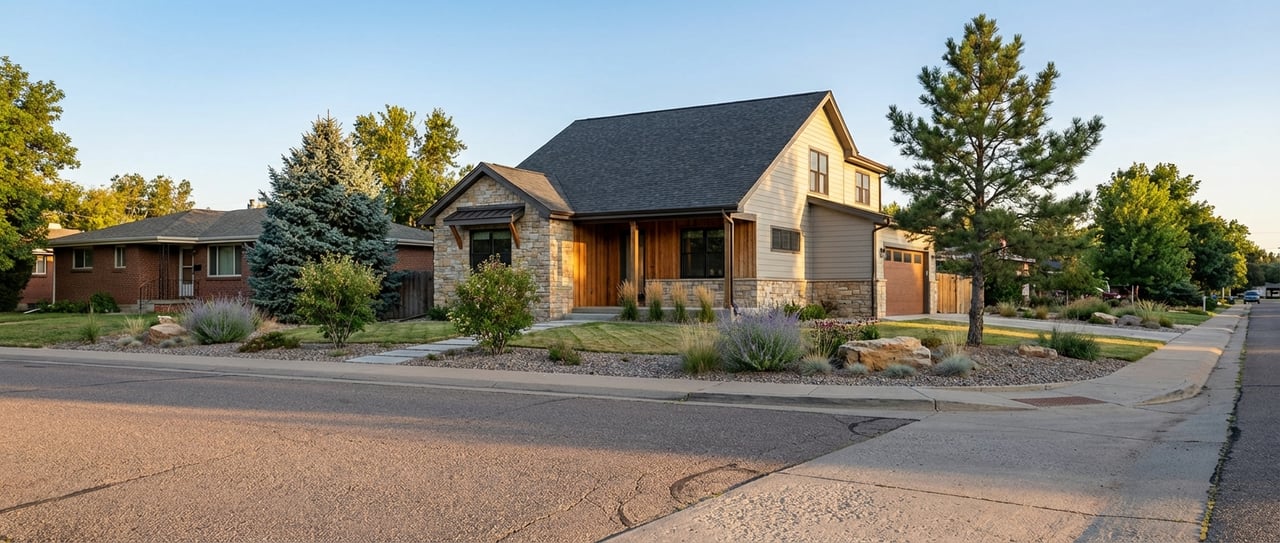
Where Parker Fits In The South Denver Housing Ladder
February 19, 2026
February 19, 2026
February 19, 2026
Trying to make sense of Parker’s place in the South Denver market? You’re not alone. Many buyers and sellers compare Parker to Highlands Ranch, Lone Tree, Castle Rock, and the closer‑in luxury markets to figure out where their budget and lifestyle fit best. In this guide, you’ll see where Parker lands on price, space, and commute so you can plan your next move with confidence. Let’s dive in.
Parker’s typical home value sits in the mid‑$600ks to low‑$700ks. Recent snapshots show Parker around $675k on one index and about $705k for active and recent sales. Treat that as Parker’s main price band rather than a single number. The takeaway: Parker tends to track near the Douglas County median while staying well below the premium inner‑south markets.
Market pace has eased from the 2021–2022 peaks. Recent reports showed a median days on market around 87 days, with more active listings than in the tight‑inventory years. That points to a more balanced market and gives you time to compare neighborhoods without rushing.
Price per square foot is another helpful signal. Parker’s recent figure hovered around $231 per square foot. Keep in mind that larger homes on bigger lots can pull $/sq ft lower even if the total price is higher, so compare at the neighborhood level.
Douglas County overall tends to land close to Parker’s band, with county medians reported around the low $700ks in recent periods. For county‑level context, you can review aggregated metrics on resources like PropertyFocus, which tracks market trends across the area.
Parker offers a wide spectrum of lot sizes. Among active listings, the median lot is about 0.17 acres (roughly 7,400 square feet). Many newer subdivisions and paired homes sit on smaller lots that keep yard work simple and entry prices more accessible.
If you want more outdoor space, Parker delivers. Established pockets like The Pinery often feature lots around 0.3 to 0.5 acres or more, and estate areas near the Colorado Golf Club can stretch to multi‑acre properties. This variety is a key part of Parker’s value story.
By comparison, Highlands Ranch commonly shows smaller, denser lots near 0.15 acres in many neighborhoods. Closer‑in south Denver suburbs near the Tech Center can have smaller suburban lots or infill homes near amenities, while Cherry Hills Village stands apart with estate‑scale parcels.
In the South Denver corridor, newer master‑planned areas often balance smaller lots with modern floor plans and nearby amenities. Lone Tree’s RidgeGate, for example, emphasizes townhomes, stacked flats, and smaller single‑family sites near retail and rail. You can browse builder collections that illustrate this trend in the RidgeGate area through resources like the Thrive Home Builders Frequency Collection listings on Jōme.
Parker’s new‑home pipeline leans into a mix of paired homes, 40–50 foot lots, and conventional single‑family product to keep entry prices competitive. Communities such as Newlin Crossing and similar offerings on NewHomeSource show how builders are tailoring floor plans and lot sizes to today’s budgets while still providing access to parks, trails, and regional roads.
Average travel time for Parker residents sits near 27.9 minutes, similar to Douglas County’s countywide average of about 27.1 minutes. Those figures reflect all directions and schedules, so your real‑world experience will depend on route and timing.
Typical drives to the Denver Tech Center often land in the 20 to 30 minute range when conditions are normal. Downtown Denver commonly falls around 25 to 40 minutes off‑peak, with rush‑hour traffic adding time. If you rely on a consistent rail commute, factor in that Parker does not have a direct light‑rail station.
Parker is served by RTD bus routes, including express options and a Park‑n‑Ride with weekday service that connects to major transfer points and light rail. Many residents drive to the Lincoln or Lone Tree/RidgeGate stations for rail access. You can review the town’s transit overview on the Town of Parker’s public transportation page and stay aware of regional planning updates that could improve corridor operations over time through DRCOG’s Transportation Improvement Program.
Use these quick guidelines to set smart expectations and shortlist neighborhoods:
Parker tends to fit buyers who value space, newer single‑family options, and a range of lot sizes more than a direct rail commute. It offers a solid middle rung on the South Denver ladder: typically more affordable than the inner‑south luxury markets, broadly comparable to Highlands Ranch and Castle Rock, and below Lone Tree’s newer luxury pockets.
If that balance sounds right, you can navigate Parker with confidence by focusing on neighborhood‑level comparisons and commute routes that fit your routine.
Ready to weigh your options with local guidance from a team that handles everything from first tours to complex listings? Connect with Dolby Haas for straight answers, on‑the‑ground neighborhood insight, and premium marketing. Get a Free Home Valuation and a clear plan for your next move.
Stay up to date on the latest real estate trends.
Real Estate
August 17, 2026
August 12–18, 2026
Broker
What Metro Denver Sellers Need to Know
Real Estate
Housing Market

Real Estate
AI helps us work faster. Experience helps us know what matters
Real Estate
The Story of 2237 Rim Ridge Drive
Dolby Haas has established a reputation for outstanding performance including several recording-breaking sales from Northern Colorado Springs, Evergreen, Greater Denver, and Broomfield. Contact him today!