Denver Housing Market Update
Real Estate Grant Dolby November 5, 2026
Real Estate Grant Dolby November 5, 2026
Real Estate Grant Dolby November 5, 2026
DOLBY HAAS REAL ESTATE SOLUTIONS | DENVER MARKET INTELLIGENCE
November 5, 2026 | By Grant Dolby, Dolby Haas Real Estate Solutions
Denver's housing market isn't collapsing. It's adjusting to a reality many sellers still haven't fully accepted: buyers have choices, negotiating power has shifted, and the strategies that worked a few years ago are no longer reliable.
The latest market statistics reveal a widening gap between the number of homes available and the number of buyers prepared to purchase them.
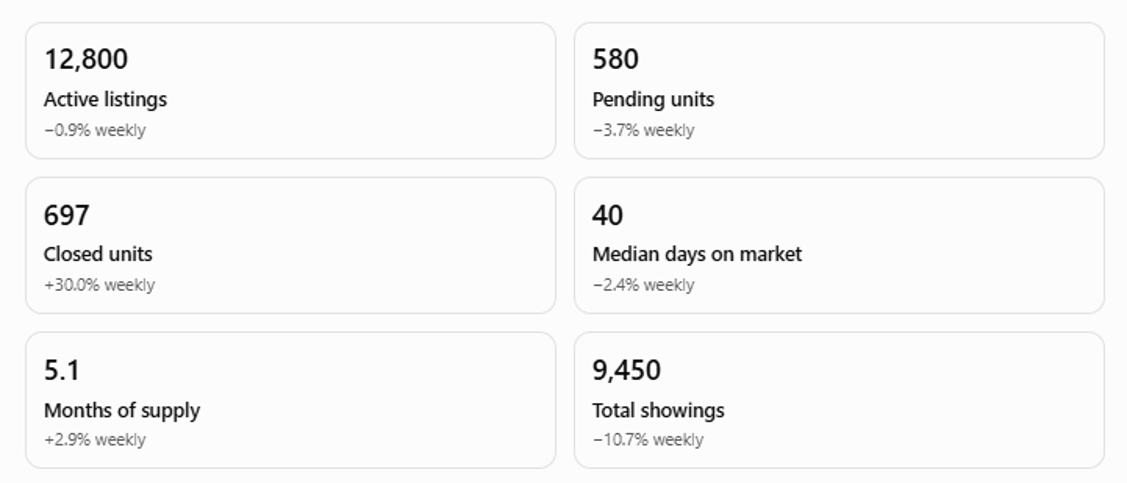
During the October 28–November 3 reporting week, Denver Metro recorded 12,800 active listings, 580 pending listings, and 697 closed sales. Showings declined another 10.7%, while available inventory represented approximately 5.1 months of supply.
Even more revealing, a separate seven-day REcolorado activity report shows 1,710 price reductions compared with just 986 new listings.
That is nearly 1.73 price reductions for every new listing.
These reports cover different geographic areas and measure different activity, so their figures shouldn't be combined into a single market calculation. But together, they reinforce an important conclusion: sellers are increasingly competing for a smaller pool of active buyers.
Source: First American Title Metro Denver Market Snapshot, October 28–November 3, 2026. Seven-county coverage: Adams, Arapahoe, Broomfield, Denver, Douglas, Elbert and Jefferson.
Perhaps the most revealing number is not inventory, price or days on market. It is buyer activity.
There were 9,450 scheduled showings across 12,800 active listings, equal to approximately 0.74 showings per active listing during the week.
That doesn't mean every listing received a showing. Some homes attracted several, while others received none. It does illustrate how thin buyer traffic has become relative to the available inventory.
The 30% weekly increase in closings is encouraging, but closings are a lagging indicator. Many of those buyers made their decisions weeks earlier. Pending activity and showings provide a more immediate picture of buyer engagement, and both declined.
MARCH 2022
Weekly selling-odds index
SEPTEMBER 2026
Weekly selling-odds index
One of the clearest illustrations of how dramatically the market has shifted comes from First American Title's historical weekly selling-odds indicator.
In March 2022, the indicator reached 87.3%. By September 2026, it had declined to 28.1%—a reduction of 59.2 percentage points.
First American Title weekly selling-odds indicator
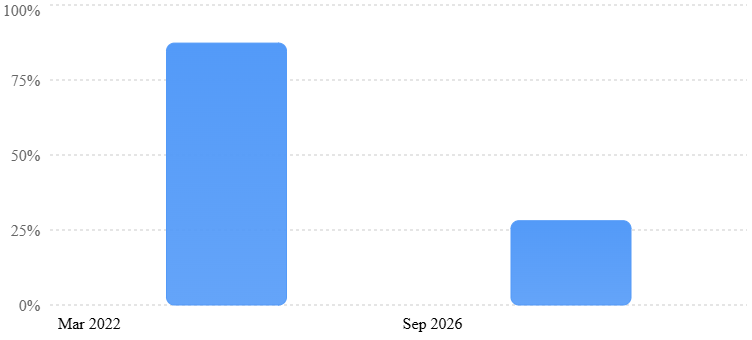
This is a market-velocity measure, not a literal forecast that any particular home has a 28.1% chance of selling. A property's actual prospects depend on pricing, location, condition, marketing, competition and the time allowed to find a buyer.
Nevertheless, the change is substantial.
In 2022, buyers routinely competed against one another, waived contingencies and offered above asking price. Today's buyers are more selective, have more homes to consider, and often have the time to negotiate.
The fundamental change is that sellers are now competing for buyers, rather than buyers competing for sellers.
The broader REcolorado Market Watch activity report covering the last seven days provides another revealing perspective.
Counts of listing events, not unique properties. Broader and unfiltered geographic coverage.
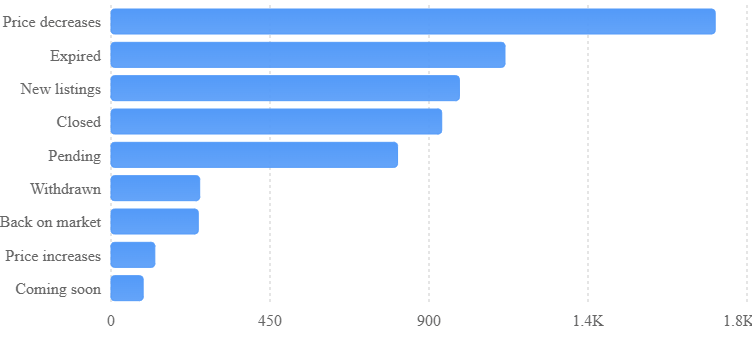
Source: REcolorado Matrix Market Watch, seven-day activity supplied November 5, 2026. Price adjustments and status changes are event counts; one property may generate multiple events. The search includes a variety of Colorado locations outside the seven-county Denver Metro snapshot.
For every 100 new listing events, approximately 173 price-reduction events were recorded.
That does not mean 173% of newly listed homes reduced their prices. The two figures represent different activity categories, and some properties may have undergone more than one price adjustment.
Still, the imbalance is striking.
Rather than waiting for new buyers to enter the market, many sellers are revising prices on homes already available.
There were also 1,115 expired listing events and 251 withdrawals. Those numbers cannot be interpreted as 1,366 unique sellers abandoning the market, but they point to substantial listing turnover.
An expired listing isn't necessarily an unsellable property. It may simply be a property that failed to connect with the market at the asking price, within the listing period, under the marketing approach used.
This is why evaluating failed listings requires more than looking at the final asking price. The original launch, competitive positioning, presentation, showing activity, price-change history and buyer feedback all matter.
On November 4, the Denver Metro Association of REALTORS® released its October 2026 housing report, providing a broader monthly perspective.
The numbers confirm that the weakening buyer demand visible in our weekly reports is not an isolated development.
October closings
−23.54% year over year
Sales with concessions
$12,557 average concession
October produced the fewest closings for that month since 2010. Inventory remained around 13,000 properties even as new listings declined 16.7% from September.
While transaction volume has fallen sharply, sale prices have been more resilient. That's an important distinction: fewer people are buying homes, but the homes that sell are not necessarily experiencing comparable price declines.
October 2026 | Detached homes | Condos / townhomes |
|---|---|---|
Median sale price | $645,000 | $375,000 |
Year-over-year change | −0.64% | −3.25% |
Median days in MLS | 26 | 48 |
Sale-to-list ratio | 98.55% | 97.69% |
Median days in MLS, October 2026
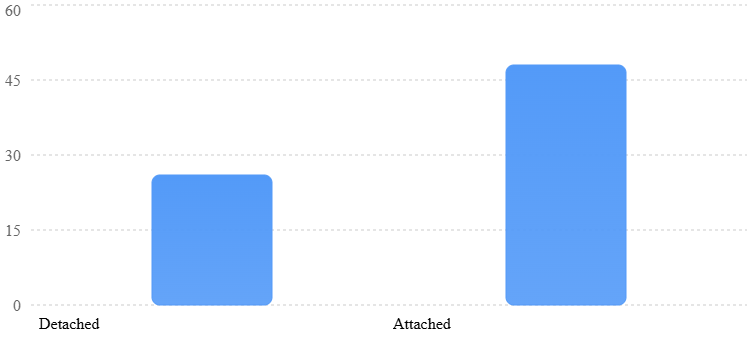
Condominiums and townhomes have more than seven months of supply, giving buyers greater leverage in that segment. Detached homes are comparatively more resilient, although individual neighborhoods and price ranges can tell very different stories.
One of the most significant findings in the October report is that 65% of completed sales involved a seller concession, averaging $12,557.
That raises an important question: what does a recorded sale price actually tell us?
A home closing at $600,000 with a $15,000 seller credit is not economically identical to one closing at $600,000 without a concession.
Seller credits may help pay closing costs, temporarily reduce mortgage payments or support an interest-rate buydown. They can also help preserve the contract price reported in public records.
As a result, headline median prices alone may understate the amount of negotiation occurring in the market.
This doesn't mean every seller should offer concessions. It means that serious comparative market analysis needs to account for the terms of competing transactions, not simply their published sale prices.
Financing costs remain one of the biggest obstacles to stronger buyer demand.
Freddie Mac's October 29 survey placed the average 30-year fixed mortgage rate at 7.24%, compared with 6.17% one year earlier. Rates have eased from their recent October highs but remain elevated.
Affordability affects more than first-time buyers. It also affects existing homeowners who may be reluctant to surrender low mortgage rates, limiting both move-up purchases and the supply of homes that would otherwise come to market.
Buyers who do remain active have increasingly selective options. They can compare properties, weigh concessions and negotiate rather than rushing to secure the first suitable house.
We're approaching the part of the calendar when housing activity traditionally slows.
Families are focused on holidays, school schedules and year-end commitments. Some sellers withdraw their properties and plan to return in the spring.
This seasonal pullback matters. The current 10.7% weekly decline in showings should not be interpreted entirely as a permanent reduction in demand.
However, seasonality does not explain away the larger change since 2022.
For sellers, the decision to market during the winter or wait for the spring involves a trade-off. Waiting may produce a larger buyer pool, but it can also bring a substantial increase in competing listings.
A spring listing is not automatically worth more simply because the calendar changes.
Buyers can also benefit from year-end conditions, particularly when a seller has a clear reason to complete a transaction. But the best-priced, best-presented homes may still attract strong interest regardless of season.
The market is becoming less forgiving of pricing errors, weak presentation and ineffective marketing.
When showings are scarce, a listing can sit for weeks without attracting enough qualified buyers to generate useful feedback.
Small price reductions may also accomplish very little if they leave the property competing against substantially better alternatives.
The objective should be to establish where the property belongs in the competitive market—not simply to pick a price based on what a neighbor sold for several years ago.
At Dolby Haas, our analysis centers on current competition, adjusted comparable sales, absorption, buyer activity and the property's market position.
A listing that has failed to sell deserves a fresh evaluation of its entire strategy. Re-entering the MLS with the same presentation and essentially the same price may simply repeat the previous result.
For more on our approach, see Price with Confidence.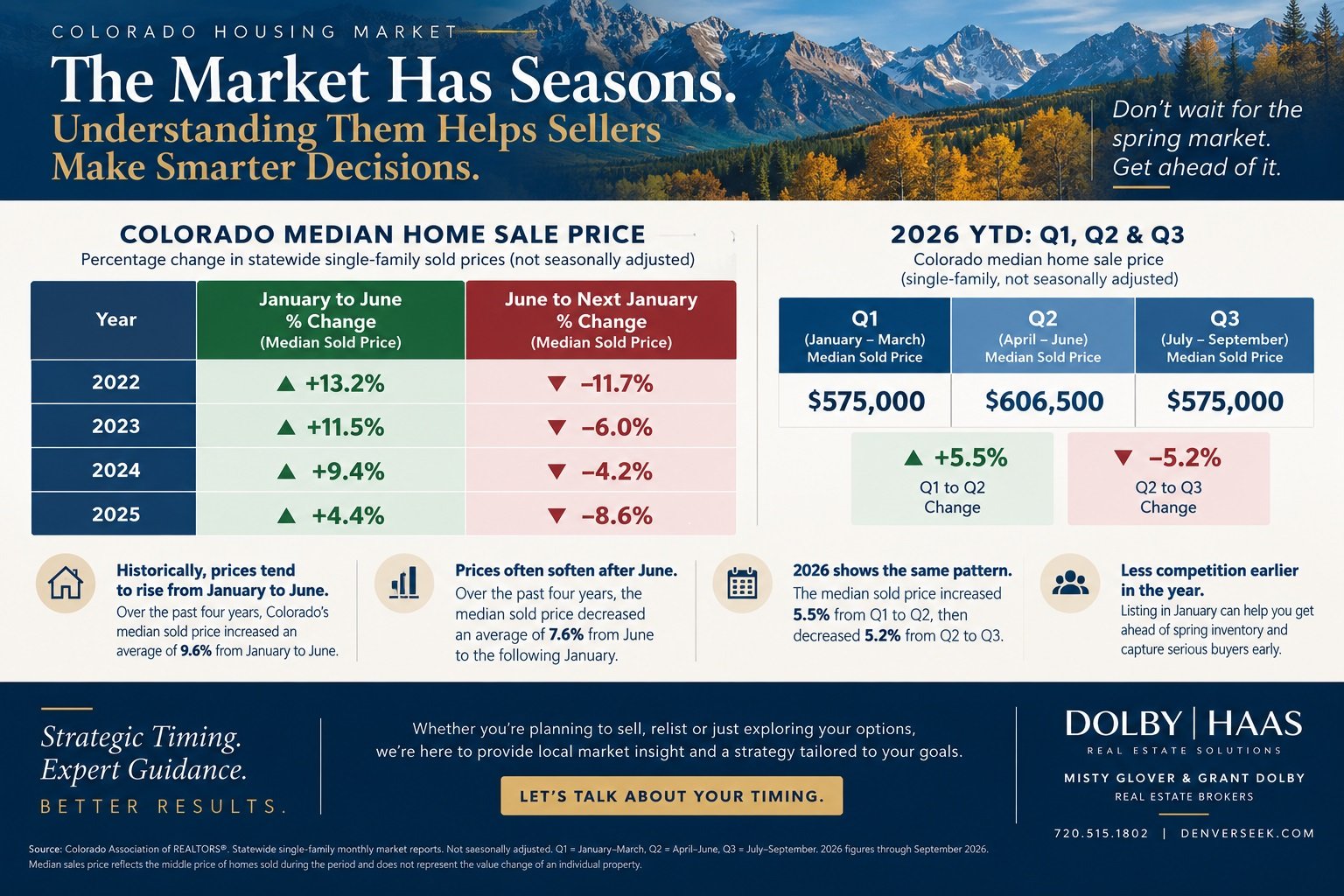
Buyers have opportunities that were largely unavailable during the frenzied market of 2021 and early 2022.
More choices and fewer competing offers create room to negotiate price, repairs, financing credits and closing terms.
But it would be a mistake to assume every property is overpriced or that all sellers are distressed.
Some homes are still positioned competitively and sell quickly. Others have significant gaps between their asking prices and what current buyers are willing to pay.
The opportunity lies in distinguishing between the two—and recognizing that a favorable purchase price is only one component of a successful transaction.
Three trends deserve particular attention as we move toward the end of 2026 and into the first quarter of 2027.
First, buyer activity relative to available inventory will be more informative than inventory totals alone. If showings and pending contracts begin increasing faster than new listings, market conditions may improve before that improvement appears in closed-sales data.
Second, seller concessions and effective net sale prices deserve closer scrutiny. A stable median closing price does not necessarily mean that seller negotiating power has remained stable.
Third, the relationship between new listings and price reductions will provide an early signal of whether sellers are finding prices the market will accept.
These indicators are worth watching, but none can reliably predict the direction of prices by itself.
Denver has moved from an unusually competitive seller's market into one where buyers have substantially more leverage.
The housing market hasn't stopped functioning. Well-positioned properties continue to sell, and many owners retain substantial equity.
What has changed is the margin for error.
In 2022, a strong market could rescue a weak listing strategy. In 2026, a strong listing strategy must overcome a weaker market.
Success today depends less on where prices have been and more on understanding where buyers are willing to act right now.
Grant Dolby | Dolby Haas Real Estate Solutions
35 years of real estate experience | Local Expertise. Proven Results.
Data and methodology: Weekly Denver Metro figures are from the First American Title snapshot for October 28–November 3, 2026, covering seven counties. The First American selling-odds series is a market-velocity indicator, not an individual property probability. REcolorado Matrix seven-day activity is from the user-supplied unfiltered report dated November 5, 2026; its geographic coverage is broader and counts listing events rather than necessarily unique homes. October monthly statistics are from the DMAR October 2026 report published November 4, covering its 11-county metro area. Mortgage-rate data comes from Freddie Mac. These sources use different reporting windows and populations and should not be treated as directly interchangeable.
Stay up to date on the latest real estate trends.
Real Estate
Nov 5, 2026



Oct 27, 2026


Real Estate
How We Work

October 7 -13, 2026


From an 87% Chance of Selling to Just 28%
Dolby Haas has established a reputation for outstanding performance including several recording-breaking sales from Northern Colorado Springs, Evergreen, Greater Denver, and Broomfield. Contact him today!