Why Sellers Overprice Their Homes
Real Estate Grant Dolby July 14, 2026
Real Estate Grant Dolby July 14, 2026
Real Estate Grant Dolby July 14, 2026
Most pricing mistakes are not caused by bad math. They are caused by anchoring, confirmation bias, loss aversion, and the very human desire to prove that our house is the exception.
For sellers who want the highest realistic price—not the longest listing.
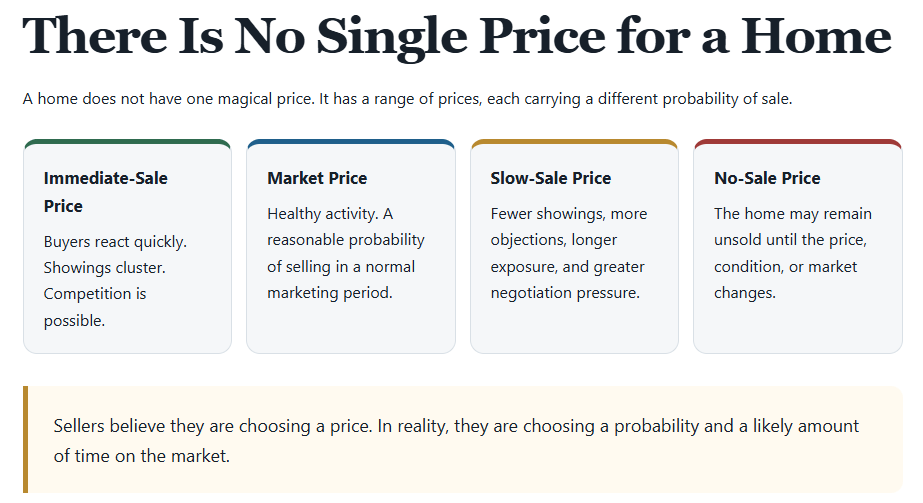
Every seller wants the highest possible price in the shortest reasonable amount of time. Yet many sellers unconsciously choose a number first and then spend the rest of the listing trying to prove they were right. That is not a real estate problem. It is human nature.
The Curve Is Not Linear
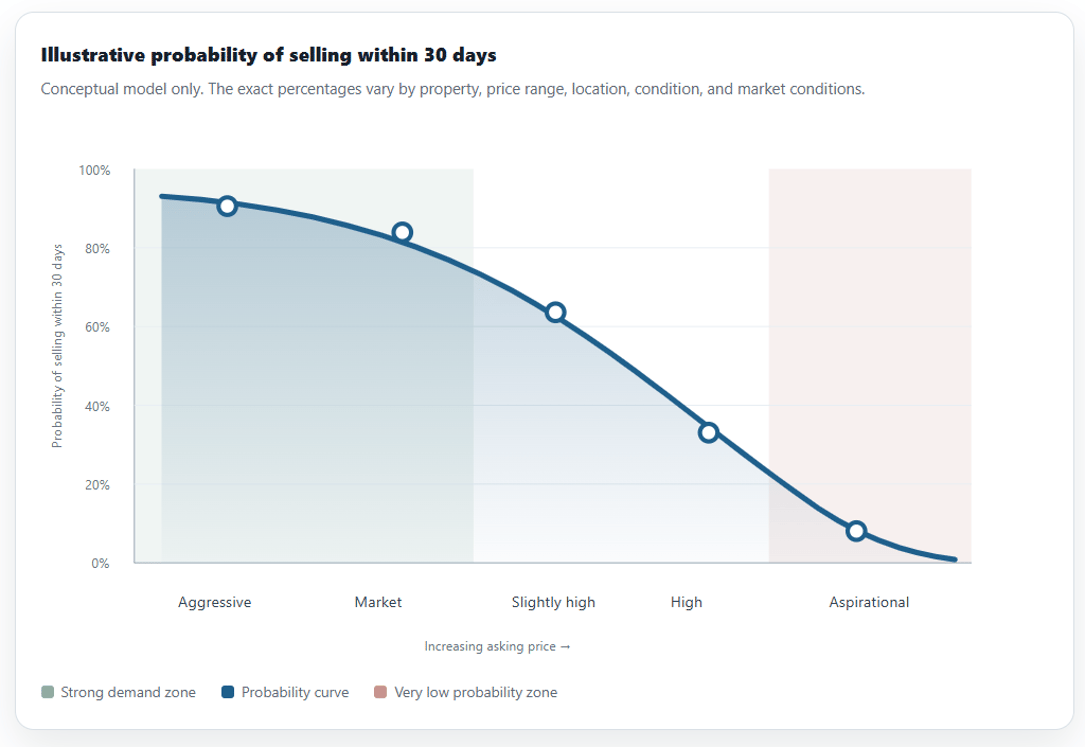
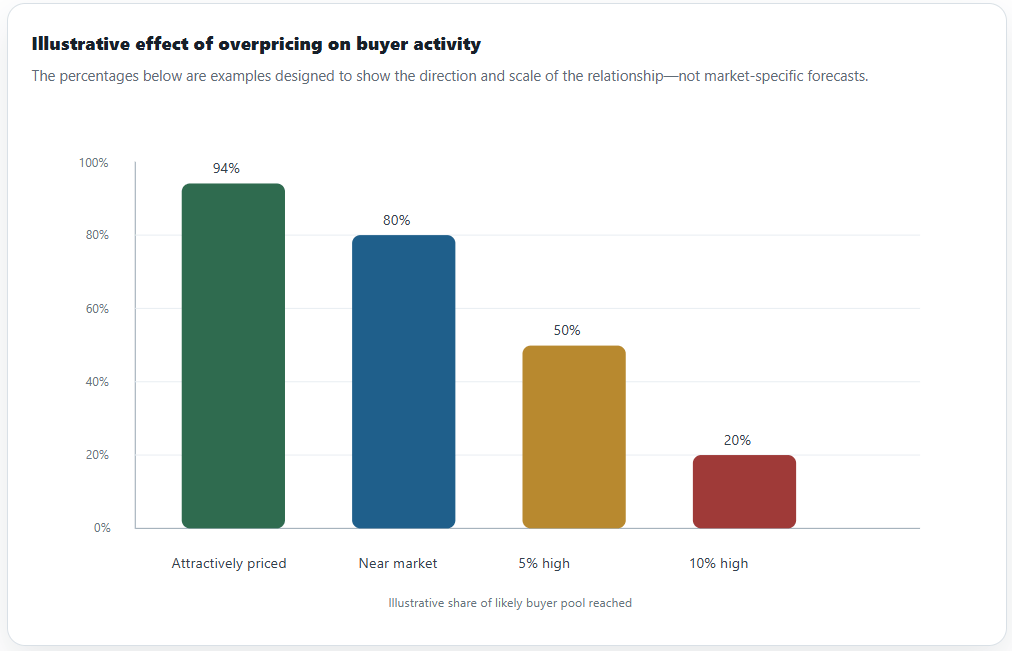
A modest price increase does not always cause a modest decrease in demand. In many cases, demand drops sharply once a home crosses the line between defensible and aspirational pricing.
That is why a home can receive immediate attention at one price and almost no activity after being priced only five or ten percent higher. Buyers do not compare a property in isolation. They compare it with every competing option available at the same time.
“The market does not argue with the seller. It simply withholds showings, second showings, and offers.”
Why “We Can Always Come Down Later” Is Expensive
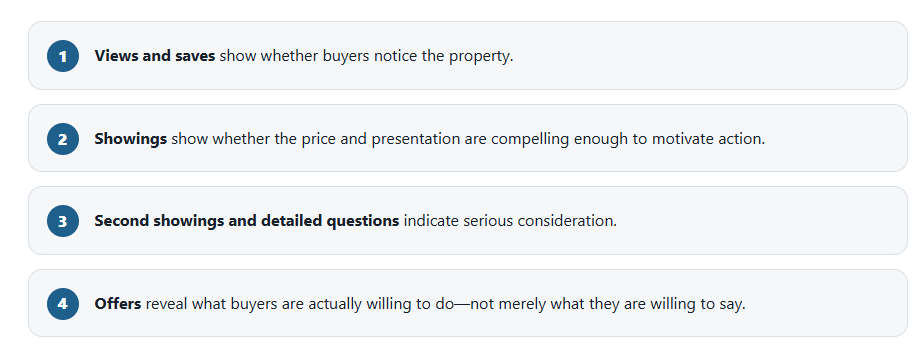
The first days on the market usually produce the greatest concentration of attention. Active buyers receive alerts. Agents notice the new inventory. The listing is fresh, and no one is yet asking what might be wrong with it.
Overpricing consumes that window without converting attention into offers. When the price is finally corrected, the property is no longer new. Buyers have already formed an opinion, and the listing history becomes part of the story.
A late price correction does not restore the original launch. It merely introduces the correct price to a listing that is now older.
Market Activity Is Data, Not an Insult
A seller should not defend a price as if it were a personal belief. A price is a hypothesis. The market tests it.
A Better Pricing Question
Instead of asking, “What is my home worth?” ask:
At what price do we maximize both the expected sale price and the probability of selling within the seller’s desired time frame?
That question recognizes the actual tradeoff. Price, time, condition, competition, and buyer motivation are connected. A seller cannot optimize one while pretending the others do not exist.
The Goal Is Not to Be Right
The goal is to sell well.
The market does not care what the seller needs, what the seller spent, what a neighbor claims to have received, or what an online valuation suggested. Buyers compare the home with competing choices and decide whether to act.
Sellers who treat pricing as a strategy tend to respond sooner, preserve leverage, and reach the closing table with fewer unnecessary carrying costs. Sellers who treat pricing as a belief to be defended often spend months trying to persuade the market that it is wrong.
Stay up to date on the latest real estate trends.
Real Estate
August 17, 2026

August 12–18, 2026

Broker
What Metro Denver Sellers Need to Know


Real Estate
Housing Market

Real Estate
AI helps us work faster. Experience helps us know what matters

Real Estate
The Story of 2237 Rim Ridge Drive

Dolby Haas has established a reputation for outstanding performance including several recording-breaking sales from Northern Colorado Springs, Evergreen, Greater Denver, and Broomfield. Contact him today!