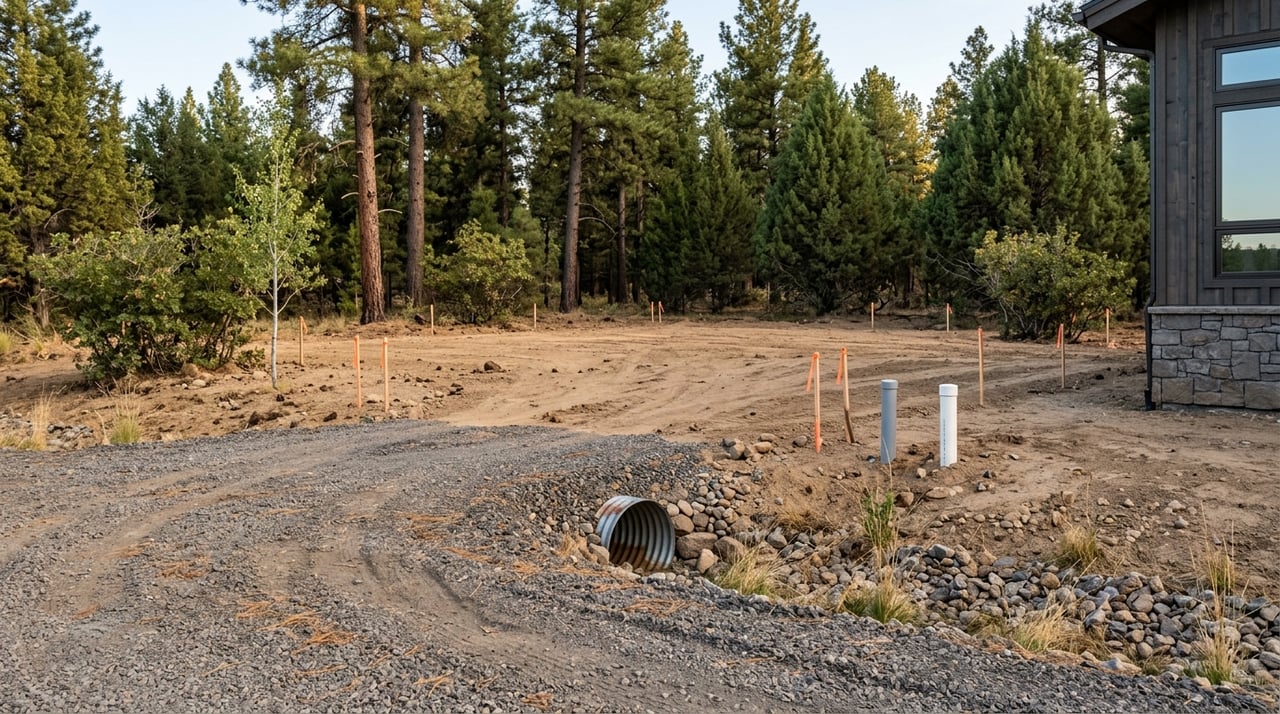
Buying Land Near Castle Rock: What To Know Before You Walk A Lot
June 18, 2026
June 18, 2026
June 18, 2026
Buying land near Castle Rock can feel exciting the moment you step onto a lot and picture the home you want to build. But in this market, the big questions usually are not just about price, views, or even size. They are about jurisdiction, utilities, access, and whether the parcel can realistically support your plans. If you are thinking about buying a lot in or around Castle Rock, this guide will help you know what to check before you walk the property. Let’s dive in.
One of the most common mistakes buyers make is assuming a Castle Rock mailing address means the Town of Castle Rock governs the property. That is not always the case. Some parcels are inside town limits, while others are in unincorporated Douglas County and follow a different process.
That distinction matters right away because the Town only approves development inside town limits. If a parcel is outside town limits, annexation may be part of the path before development can move forward under Town rules. In some areas, utility service can also differ from permitting jurisdiction, which adds another layer to review early.
Castle Rock and Douglas County do not run the same development process. The rules, review steps, and approval timelines can vary depending on where the parcel sits today. That means you should confirm the governing agency before assuming what can be built or how quickly it can happen.
You will also want to confirm whether the lot is straight zoned or governed by a planned development plan. Zoning and planned development rules shape allowed uses, density, setbacks, and design standards. If annexation is required, zoning must be established as part of that process.
Before you focus on house plans, confirm what the land allows on paper. A parcel may look ideal in person but still come with limits that affect layout, size, placement, or use.
Castle Rock’s official maps can help identify zoning, annexation status, ridgeline and skyline protection areas, and development activity nearby. That matters because what surrounds the lot today may not be what surrounds it later. A view corridor, neighboring project, or mapped protection area can affect both design and expectations.
A beautiful parcel is not very useful if access is unclear or difficult to improve. In Douglas County, legal and physical access is one of the first issues buyers should review, especially on rural and semi-rural land.
Access may come from a public road, a private road, or an access easement. If the lot depends on a private road or easement, you should understand who maintains it, what it costs, and whether there are grading or snow-plowing responsibilities. These details can affect both your budget and your long-term ownership experience.
Douglas County notes that a driveway permit is required with the building permit. The County also warns that driveway feasibility can influence where a home or other structure can go on the site. In other words, the best building area in your mind may not be the practical building area once slope and access are reviewed.
When you walk the lot, do not just ask, “Can I get to it?” Also ask, “Can I build a compliant driveway to the place I want the house?” That one question can save a lot of frustration later.
Utilities are often where vacant land budgets shift the most. Near Castle Rock, not every parcel has the same setup, and the answer is not always as simple as connecting to nearby service.
Castle Rock Water serves a defined area of about 37 square miles in Douglas County, including some extra-territorial subdivisions. But service area does not mean every lot has the same utility path, rates, or development requirements. You need to confirm whether the parcel is served by Castle Rock Water, another provider, or a different setup such as well and septic.
For new development in Castle Rock’s system, the Town says development must provide twice as much groundwater as it will use. Development fees for water, water-resources, wastewater, and stormwater are also assessed at permitting.
That means land cost is only part of the financial picture. If your lot depends on Town utility service, you will want to build those development fees and any water-related requirements into your total budget from the start.
If sewer is not available, Douglas County regulates on-site wastewater treatment systems. Septic systems are used where a wastewater utility cannot serve the property, and a septic-use permit is required for a new system. In some cases, permit review may also come up when a property with an existing septic system is sold or changes ownership.
For many rural parcels, it is also smart to verify water rights, understand well permit limits, and check how electric and gas service would reach the property. Some lots may require line extensions or propane instead of direct gas service. These are not small details, because they can significantly affect cost and timing.
Vacant land can look simple until the physical details come into focus. Before you get too far, verify the parcel boundaries, review any available survey information, and understand whether floodplain or topography could limit where you build.
Douglas County notes that mapped 100-year floodplains can limit building or fill and may require a floodplain development permit. The County Surveyor also explains that a land survey can establish parcel boundaries and corners, and in some cases show topography and improvements.
When you are standing on the lot, pay close attention to more than the view. Look at slope, drainage patterns, likely driveway approaches, and how the shape of the parcel may affect building placement.
A survey issue or topography challenge may not be obvious during a casual showing. But later, it can change the usable footprint of the property or increase the cost of preparing the site.
Many buyers picture land as a simpler purchase than a home. In reality, the approval path can be more complicated, especially when the parcel needs annexation, rezoning, platting, utility work, or multiple public reviews.
Castle Rock’s development process generally includes seven steps. For projects outside Town limits, annexation may come first, followed by zoning or a planned development plan, then site development, construction drawings, platting, site construction, and building construction. Several of those stages can include preapplication meetings, neighborhood meetings, staff review, and public hearings.
The Town requires public hearing notices and neighborhood meetings for many projects headed to hearing. Property owners within 500 feet receive mailed notice for neighborhood meetings, and hearing notices are posted at the property in advance.
On the county side, Douglas County offers free pre-submittal meetings with planners, engineers, and building inspectors. In the County’s planned development guide, the average applicant timeline to reach public hearings is listed at 250 days, though some have moved faster. The larger point is simple: if a lot needs land use changes, timelines are usually measured in months, not weeks.
If you want to screen land more carefully, bring a simple checklist. It can help you separate a promising parcel from one that may require more time, money, or compromise than expected.
A few mistakes come up again and again in vacant land purchases near Castle Rock. Most are avoidable if you slow down and verify the basics before you get attached to a parcel.
Land purchases often involve more moving parts than buyers expect. You are not only evaluating the property itself. You are also evaluating process, timing, infrastructure, and how your plans fit the rules that govern the parcel.
That is why local, jurisdiction-specific guidance matters. A careful review up front can help you avoid buying a lot that looks promising but turns out to be expensive or difficult to develop in the way you imagined.
If you are considering land near Castle Rock, the right strategy is to ask better questions before you write an offer. The team at Dolby Haas can help you evaluate vacant land opportunities with a clear, local perspective so you can move forward with more confidence.
Stay up to date on the latest real estate trends.

Real Estate
Recent Listings That Didn’t Sell Until We Took Over
The Market Is Buying the Lifestyle

Lifestyle
What It's Really Like Beyond the Vacation Crowds

Real Estate
This Denver Neighborhood Continues to Attract Buyers

Real Estate
A Rare Opportunity at Parkland Estates Airpark
Dolby Haas has established a reputation for outstanding performance including several recording-breaking sales from Northern Colorado Springs, Evergreen, Greater Denver, and Broomfield. Contact him today!